
What Roanoke City Property Tax Records Show
Two offices divide the work. Real Estate Valuation keeps the parcel facts: ownership updates, legal descriptions, transfers, assessments, and exemptions. The Treasurer runs the tax account side, billing and collecting what the roll produces. A parcel card ties the two records together. Just remember that a bill amount is not a market price and not a deed transfer. Read it as a tax figure only.
| Record field | What it answers | Custodian |
|---|---|---|
| Land value | Assessment allocated to land | Real Estate Valuation |
| Improvement value | Assessment allocated to buildings or other improvements | Real Estate Valuation |
| Total assessment | Combined value carried on the roll | Real Estate Valuation |
| Tax bill and payment status | Amount billed and payment account status | City Treasurer |
| Exemption or abatement | Program applied to tax treatment | Real Estate Valuation or designated program office |
| Sale and transfer detail | Recorded transfer context, if populated | GIS Sales tab and Circuit Court Clerk |
Assessed value, sale consideration, and tax due are three different measures. Each answers a different question. The bill also reflects the tax rate and any program that applies to the parcel. The Roanoke City property value page shows how to read assessed value. It places that figure next to a sale record.
Roanoke City Property Tax Assessment Roll
Real Estate Valuation keeps ownership records, property characteristics, legal descriptions, transfers, and assessments. Staff analyze sale prices, construction costs, and rents. Inspections can follow mechanical, plumbing, electrical, or building permits. A permit may prompt a review of property characteristics. It does not guarantee an assessment change.
The city follows USPAP mass-appraisal practice and IAAO standards. In 2025 the office earned the Certificate of Excellence in Assessment Administration. That honor describes office practice, not a promise that every parcel detail or value is right. An owner who spots a factual error can contact the office and file its correction or appeal forms. The city Documents and Forms page lists assessment, sales verification, and exemption materials.
Look Up Roanoke City Property Tax Bills
The online tax account takes three real-estate search keys: Parcel ID Number, Legal Property Address or a portion of it, and Legal Deed Name or a portion of it. Start with the Tax Number shown on the GIS parcel card. No match? Try the address. Then try the legal deed name. Personal property and business tax services ask for an account number and identity digits, but a real-estate parcel lookup needs none of that.
- Open the City Treasurer tax payment portal.
- Choose parcel ID, legal address, or legal deed name and enter the matching value.
- Check the account, bill period, amount, and payment status against the parcel identifier.
- If a bill is missing or the account does not match, call the Treasurer before relying on the online result.
The city tax portal FAQ describes the parcel, address, and deed-name search keys.
Use the Treasurer Fields Carefully
One parcel can surface through an exact identifier or a partial legal address or name. Prefer the Tax Number over a guessed postal line. A legal deed name may differ from the GIS Owner field. The difference may show up in capitalization or abbreviation. Ambiguous results? Call the Treasurer at 540-853-2561 or visit Room 254 at 215 Church Avenue.
| Portal field | Type | Use |
|---|---|---|
| Parcel ID Number | Parcel identifier | Direct match to the real-estate account |
| Legal Property Address | Full or partial address | Locate an account when the number is not known |
| Legal Deed Name | Full or partial name | Search the account indexed under the deed name |
Keep the bill account separate from the title record. A payment entry confirms only what the Treasurer account shows, not whether a deed is valid or an assessment fair.
Roanoke City Property Tax Due Dates
The city tax page sets April 5 and October 5 as real-estate due dates. Bills usually go out near the ends of February and August. Paying directly and no statement arrives? The city says to call 540-853-2561, because a missing bill does not erase the deadline. A due date can land on a weekend or city holiday. The FAQ then moves payment to the next working day.
The rate posted on the city page is .22 per of assessed value. That figure is dated and can change by council action. Check the current tax page for the fiscal year before estimating any bill. Downtown Service District and Williamson Road Service Area parcels may also carry a separate service-area tax. That charge is billed with the general tax. The live tax information page gives the city rate and installment dates.
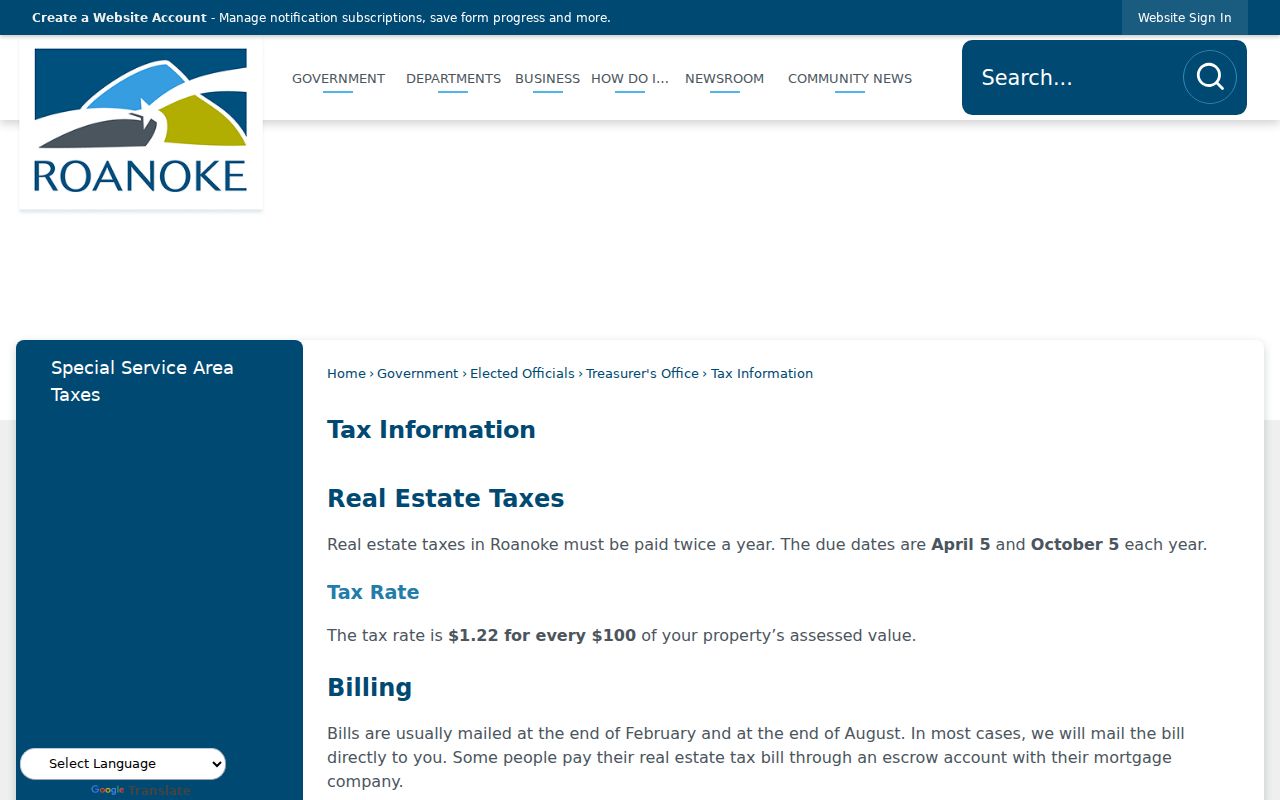
Confirm the live page before planning a payment, since rates and calendar details change.
Roanoke City Property Tax Office Contacts
The Treasurer sits at 215 Church Avenue, Room 254. The office is open Monday through Friday from 8:30 a.m. to 4:30 p.m. The office phone is 540-853-2561. Payments can go online, by mail, or through the municipal building drop box. Mail instructions say skip cash and include the bill, ticket, invoice, or account number. Returned checks draw a fee under the city payment page.
Mortgage escrow can change who receives the statement. Paid off a mortgage? The city asks the owner to notify the Treasurer so future bills arrive directly. When refinancing, send an escrow bill to the new mortgage company. Include the new loan number. For account corrections or a missed payment, use the official Treasurer channel. Skip the letter or third-party notice. The Treasurer contact page gives the office address, phone, and hours.
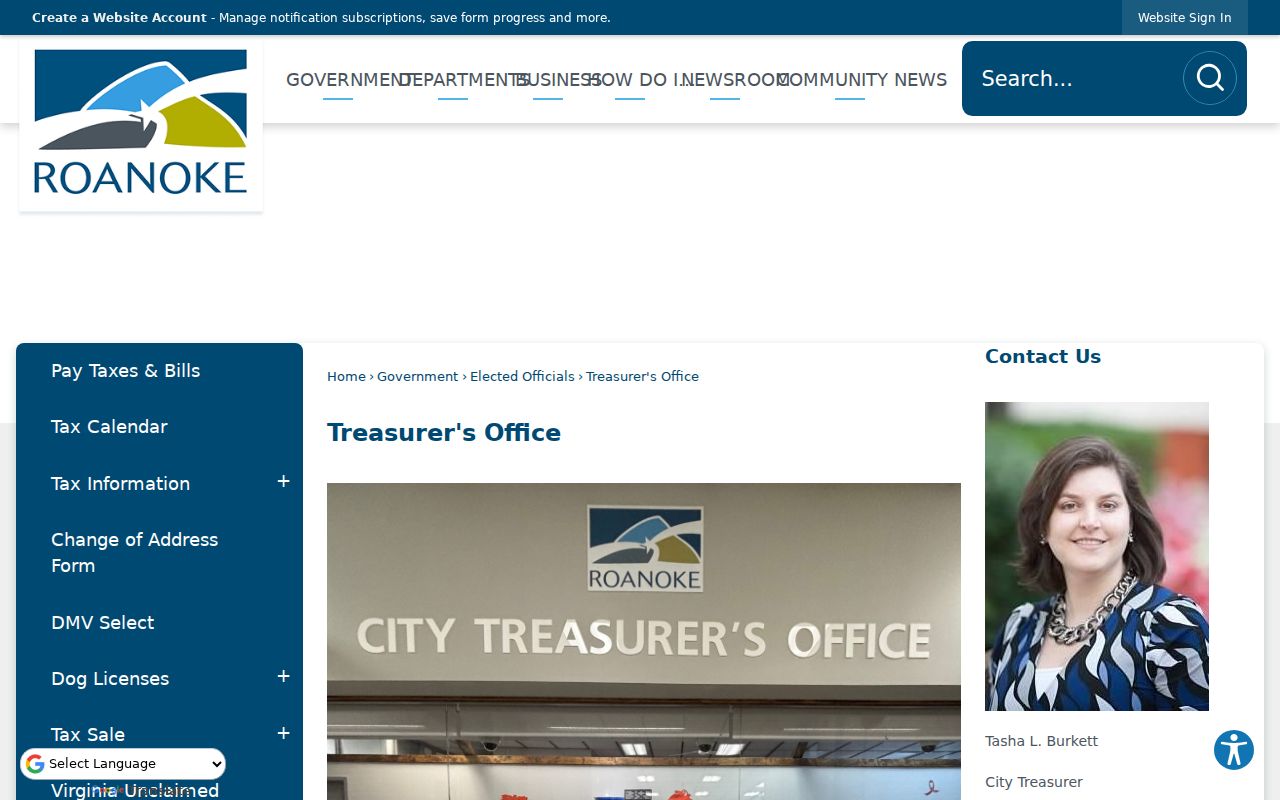
The office answers bill and collection questions, but it does not judge whether an assessment is accurate.
Roanoke City Property Tax Exemption Forms
Roanoke City offers relief programs for agricultural land use and rehabilitated structures, with separate forms for nonprofits, veterans, solar installations, hotels, and energy-efficiency upgrades. Program rules and eligibility rest with the current application form. Qualifying on paper proves nothing yet. Check the parcel account, then confirm with the responsible office that the application was actually approved.
An exemption changes the tax treatment. It does not rewrite the deed. Nor does it guarantee a new assessment. Wrong property details call for the correction route, a disputed value belongs in the valuation appeal, and a missing credit goes to the office named on the relevant form. The city tax-relief page describes the current program channels.
Appeal Roanoke City Property Tax Values
Assessment appeals in Roanoke City start at the Office of Real Estate Valuation. Reassessment notices go out in January. The office-appeal deadline shifts each year. Check the live Important Dates page instead of reusing last year’s date. An appraiser may be assigned. An interior inspection may be requested. Owners who still disagree can take evidence to the Board of Equalization, which runs its own procedures and deadlines.
The city appeal material names three grounds: fair market value, lack of uniformity, and errors in property data. The BOE form asks for the deeded owner, Tax Map number, property address, current land and improvement values, proposed values, appeal basis, comments, and supporting documents. A non-owner attendee needs a completed, notarized authorization form. Commercial or income-producing properties may need an operating statement. The city appeal page explains the Office and BOE review path.
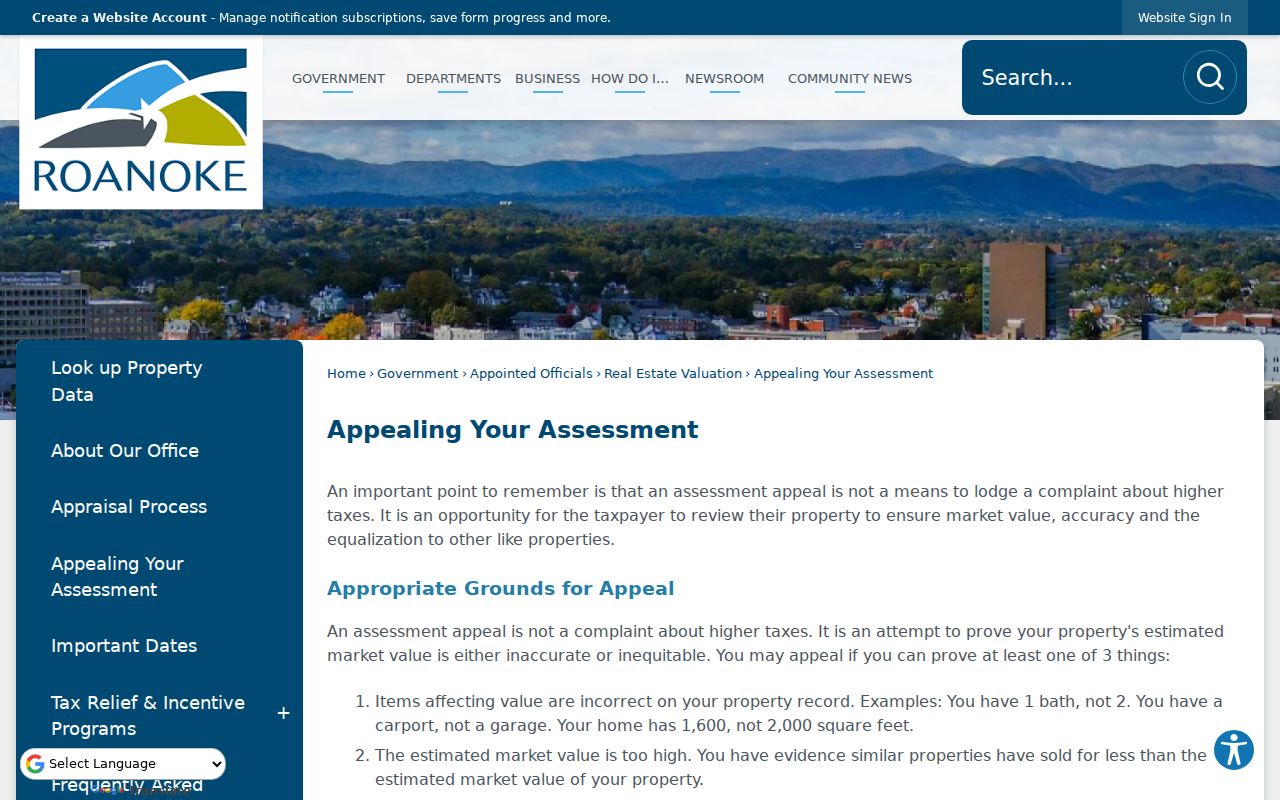
Use the current form and calendar. Keep copies of your evidence and proof that the appeal reached the office on time.
Deadline check. Roanoke City publishes an annual appeal calendar. The live Important Dates page controls the current filing date; a prior-year presentation is only historical context.
Roanoke City Property Tax Record Terms
Assessed value is the figure the city tax roll carries for taxation. The BOE form separates land, buildings, and total. Market value is the standard argued in an appeal. Sale consideration is what a transfer record states. A family conveyance, partial interest, foreclosure, or nominal transfer may not reflect an open-market price.
- Assessment roll
- The city record of property facts and assessed values.
- Tax rate
- The council-set rate applied to assessed value for a stated tax year.
- Tax lien
- A claim that can arise from unpaid tax under the governing law; ask the Treasurer for the account and the clerk for recorded instruments.
- Exemption
- A program that changes tax treatment under the rules of its current form.
Roanoke City publishes no separate fractional assessment ratio. Do not assume one for a comparison or derive market value from an invented ratio.
Roanoke City Delinquent Property Tax Sales
The Treasurer's office handles delinquent real-estate taxes for Roanoke City and runs the tax-sale program. It does not publish a full public search list online. There is no sale calendar or archive of past auctions either. Call 540-853-2561 with a Tax Number, the legal address, and the period you care about. Staff can tell you whether a notice, balance, redemption detail, or sale document exists. They can also explain how to request it.
Keep in mind that a tax delinquency is not a deed transfer. A sale notice or a case entry alone does not prove that ownership changed. To confirm it, locate the recorded conveyance or court order that actually did the work. The Circuit Court Clerk holds the recorded land instruments. The Treasurer, meanwhile, can walk you through the collection account on a parcel.
Limits of Roanoke City Property Tax Records
A paid bill does not prove clear title. An assessment is not an appraisal, and the city tax rate cannot establish what a property will sell for. For ownership questions, check the newest deed. For boundaries, use the deed and the recorded plat, and get a survey when needed. If the amount due looks wrong, ask the Treasurer to check the account first. Challenge the assessment only after that.
Match the office to the issue. Real Estate Valuation handles assessed property facts and appeals; the Treasurer handles billing, payments, and delinquency. One office cannot correct the other office’s record.