
Trace Former Roanoke City Owners
The right starting point depends on the record's age. Logan reaches back farther than the current SRA image index. The Virginia Room can also help, connecting an old street reference to a name. Keep every link. Save the document number, date, legal description, and party role for each deed, because the table separates online land images from historical sources that add context.
| Source | Published span | Where | Best use |
|---|---|---|---|
| Logan land records | 1884–1997 | City online access | Older indexes and deed images |
| SRA land-record index | Sep. 3, 1991–present | Virginia Circuit Court SRA | Search parties and newer documents |
| SRA land-record images | Sep. 3, 1997–present | Virginia Circuit Court SRA | Read newer deed images |
| Courthouse books and public terminal | City land records; ask the clerk for the needed range | Third floor, Roanoke City Courthouse | Fill an index or image gap |
| Library of Virginia microfilm | Historic reel catalog | Online catalog and library access | Find old deed-book volumes |
| Virginia Room city directories | 1888–present | Roanoke Public Libraries | Relate a historical address to an occupant |
Directories show who lived at an address, not who held title. Only the recorded instrument proves ownership.
Trace Former Roanoke City Owners Through the Chain
Reverse the party direction at each link. The newest deed names the current grantee. Search that grantee as a grantor in an earlier deed to locate the prior conveyance. Repeat the pattern until the description changes, the chain reaches an estate, or an older jurisdiction becomes relevant.
| Link in chain | Party to carry back | Compare each time |
|---|---|---|
| Most recent deed | Grantee to prior search | Tax number, legal description, date |
| Prior conveyance | Earlier grantor and grantee | Same lot, block, acreage, and additions |
| Estate or fiduciary transfer | Decedent, executor, administrator, or trustee | Probate order and deed capacity |
| Subdivision or partial lot | Developer, seller, adjoining owner | Plat reference and lot history |
Never use one street address as the chain key. Numbers and street names change. A legal description keeps the lot, block, addition, or acreage consistent across many transfers.
Roanoke City Former Owner History Has Two Online Cutovers
Roanoke City land records live in two online eras. Logan indexes and images deeds from 1884 through 1997. SRA indexing begins September 3, 1991, and its images start September 3, 1997. That overlap helps. Check both systems when a deed date falls between 1991 and the image transition. A missing image in one system does not prove the deed is absent.
Other record types follow their own timelines. Logan lists wills through 2000, plats, and commissioner-of-accounts material through 1993. SRA holds will and fiduciary images from August 2000. Judgments run from 1992, with other categories starting on separate dates. An earlier owner may have passed through probate. Search the land records and the fiduciary records together.
The city access page documents both the Logan and SRA time ranges.
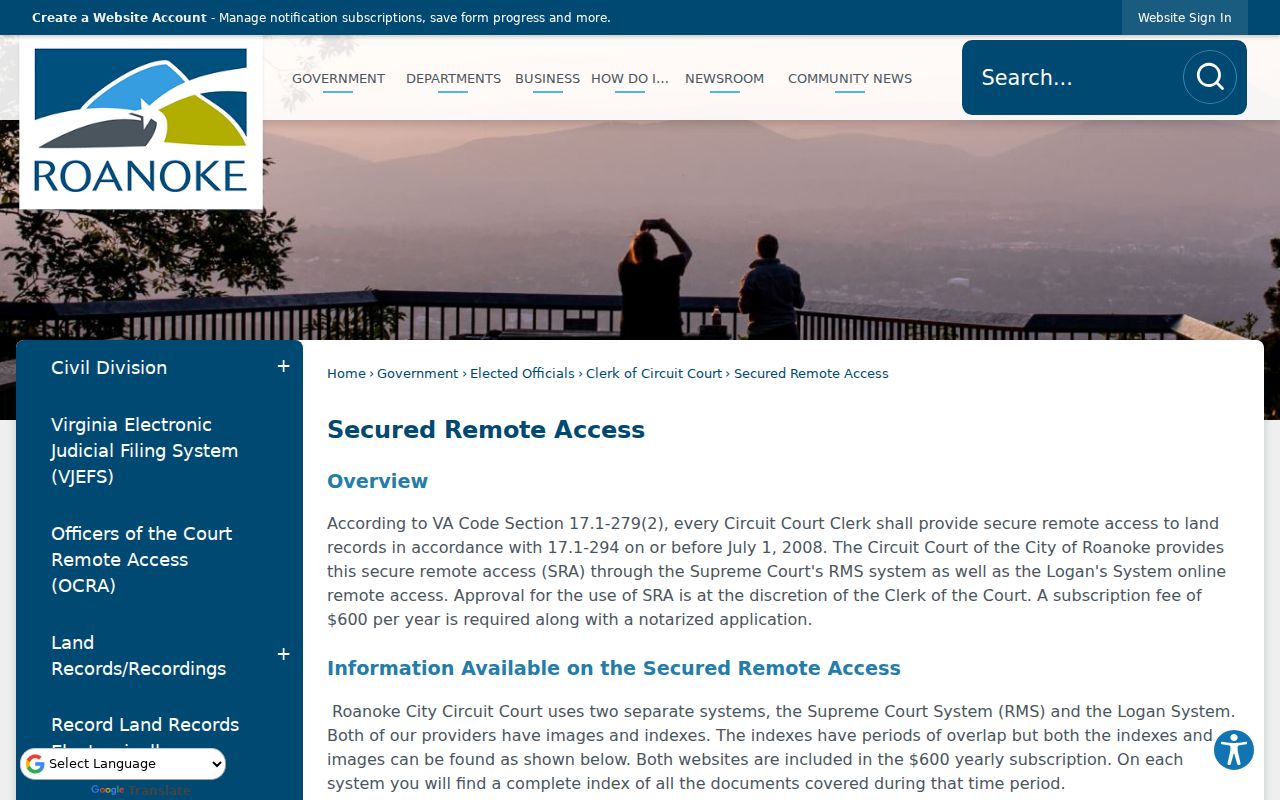
Let the cutover image guide your starting system. It cannot promise every image opens without the required access.
Search Roanoke City Former Owners by Name
Use the party-name index. Search each person or entity in both roles. The same party may appear with initials, a middle name, a company suffix, or an estate capacity. SRA search controls are dynamic, and the clerk’s static description does not list every dropdown value. A recording date or instrument number narrows common names. The Virginia SRA entry point lets a user select a circuit court.
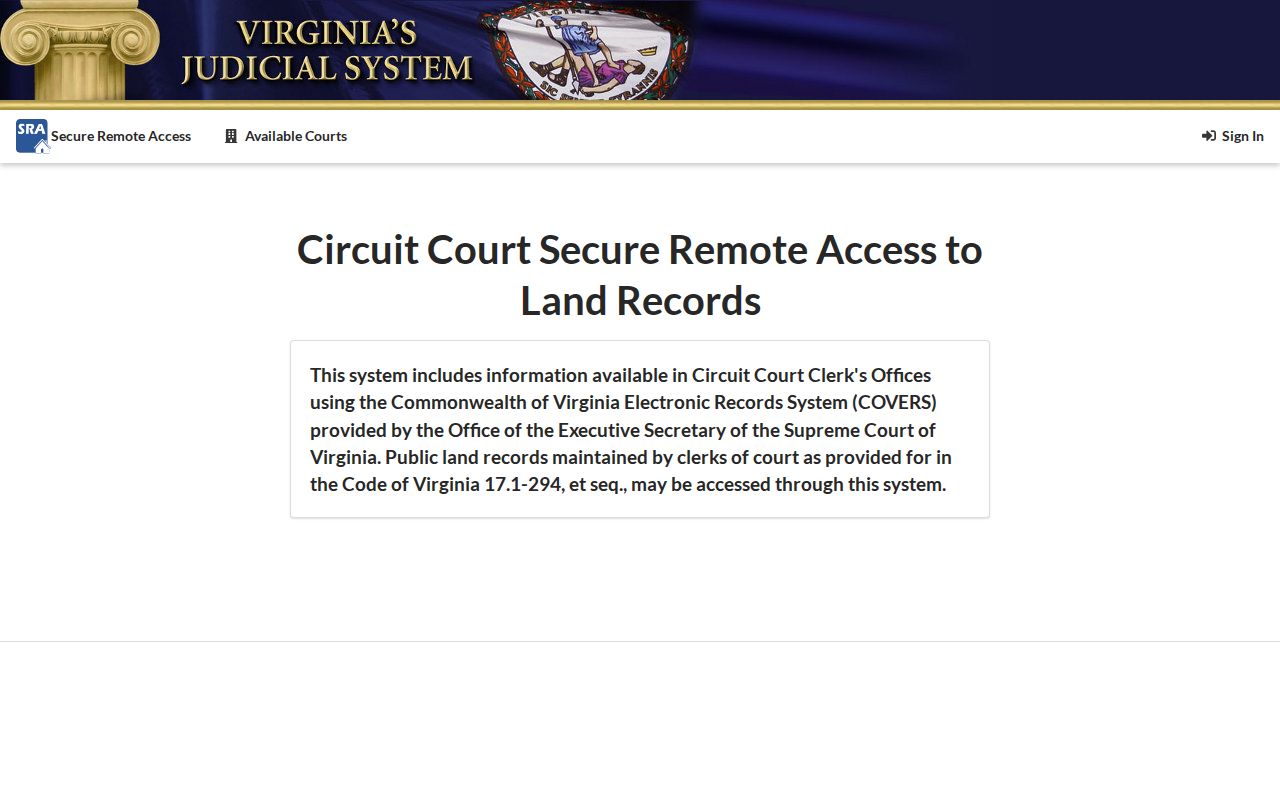
Start from a known deed or grantee. Compare any older result by its legal description instead of trusting a name match alone.
Roanoke City Former Owners Before the Image Era
Older deeds sit on microfilm. The Library of Virginia catalog identifies Roanoke City Hustings Court deed reels, including Deeds Volume 10 from 1887 to 1888 and volumes 100 through 102 from the mid-1890s. Catalog entries are finding aids. Check the reel list for a surname, deed book, or parcel clue. Never assume a sample volume holds a full property chain.
The city public room holds older paper indexes. Its land-record coverage begins with the city-era records of 1884. A parcel history can reach into earlier or neighboring jurisdictions, so the starting office depends on where the land lay when the instrument was made. The Library of Virginia catalog lists available Roanoke deed reels.
Match Former Roanoke City Owners to an Old Address
Old addresses open another door. Roanoke Public Libraries holds city directories from 1888 to the present and Roanoke Times microfilm from 1869 on. Those sources show who was tied to a street in a given year. Newspapers may also mention an estate notice, subdivision advertisement, sale, or renamed street. The Virginia Room brochure does not specify reverse-by-address years. Ask staff which volumes support that lookup. The Virginia Room brochure lists local directories, newspapers, and maps.
Treat directories as context only. A name beside an address proves nothing. Go back to the deed index, plat, or probate conveyance before adding anyone to the title chain. Did the address change? Search by the addition name, lot, block, or adjoining owner from the deed.
Roanoke City Former Owners and Place Names
Roanoke grew out of settlements whose old names still surface in historic property records. Antwerp was subdivided in 1801. Gainesborough followed in 1825 and lives on as present Gainsboro. Old Lick dates to 1834. Big Lick was chartered in 1874 before becoming the Town of Roanoke in 1882 and an independent city in 1884. Rail growth spawned additions and blocks. Those older divisions often trace a parcel better than a modern street name.
Dates can conflict, and the reason is simple. The Library of Virginia lists city formation as 1852. City history dates the charter transition to independent city status at 1884. Each number marks a different milestone. Older land may sit in Botetourt or Roanoke County records instead. The clerk cautions that annexation and boundary shifts can push a historic deed trail between local offices. Check the era as well as the place. The city history page describes Roanoke settlement and development.
Former Roanoke City Owners Through Probate Transfers
A Roanoke City deed chain sometimes breaks. The break lands where a sale deed ends and an estate begins. When that happens, search the decedent, executor, administrator, trustee, or estate name in the Wills and Fiduciary category. Then match the land transfer to the same party and property description. Keep one rule in mind. A will or death certificate alone never conveys the parcel. The instrument that moves title is usually a deed of distribution. It may instead be a fiduciary or executor deed, or a court order.
Virginia death certificates stay restricted until the public period opens. Probate and land records are different. They follow standard clerk access rules. If an estate interrupts your deed trail, tie the probate record back to the legal description and Tax Number. Then resume the earlier grantee search with that anchor.
Get Deed Copies for Older Roanoke City Owners
Head to the Circuit Court Clerk public room on the third floor. The address is 315 Church Avenue SW. Weekday hours run 8:00 a.m. to 4:00 p.m. except holidays. Plain copies of recorded deeds run fifty cents a page. Certification adds two dollars to each document. Need help pulling an index entry? Call the land-record desk at 540-853-6709. Bring whatever you can, whether that is an exact index name, a role, a date, a book and page, or an instrument number. The clerk can then locate the deed records fast.
The clerk page explains copy access for city land records.
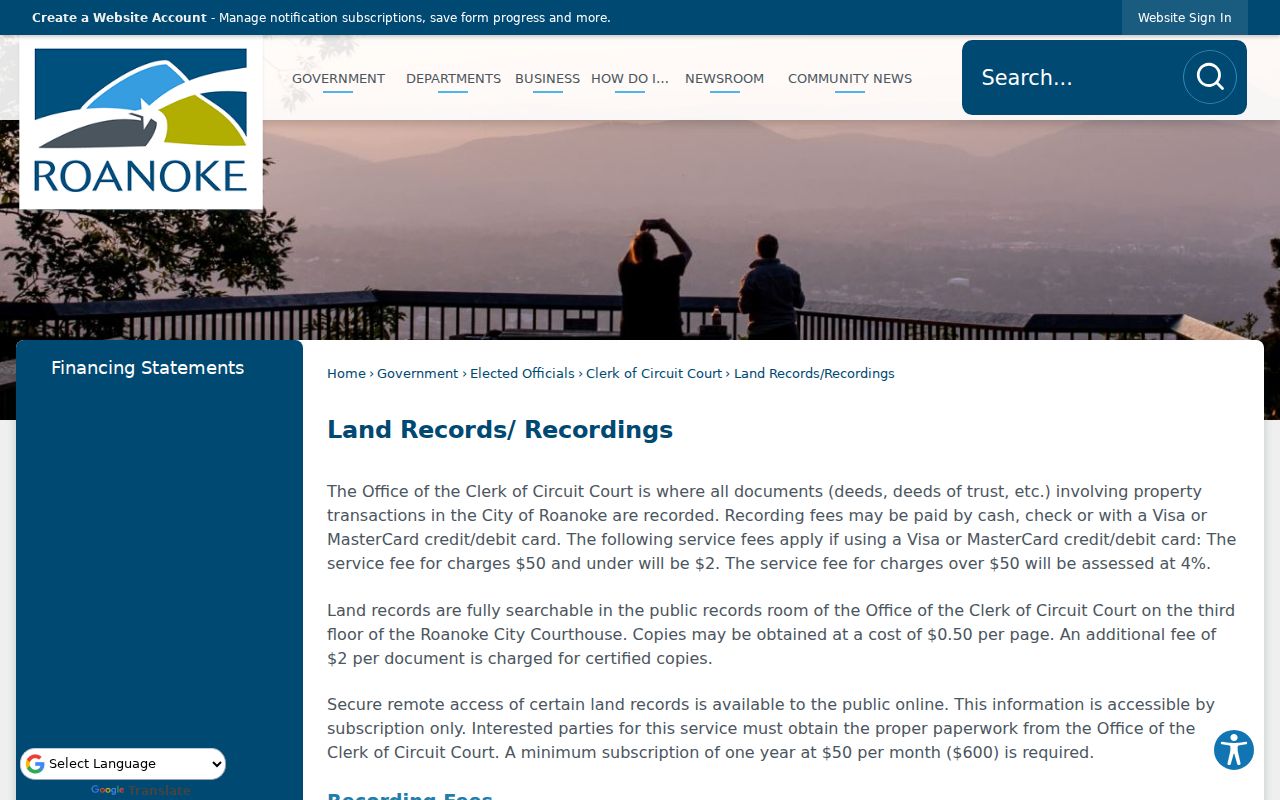
The published copying schedule covers ordinary and certified copies. An online subscription and a certified counter copy are two different access products.
Use the Public Room for Roanoke City Former Owners
The clerk public room holds land instruments beside judgments, financing statements, wills, and probate. It also keeps other court records. It earns its keep when an online index stops or an image is missing. Staff can also help you locate the right book. Ask for the City of Roanoke record, not Roanoke County. The county runs a separate clerk system. For a predecessor book, ask a simple question. Which local jurisdiction held the record at the time it was filed? The room supports searching and copying. Staff cannot certify a complete chain or issue a title opinion. The public records room page gives hours and record categories.
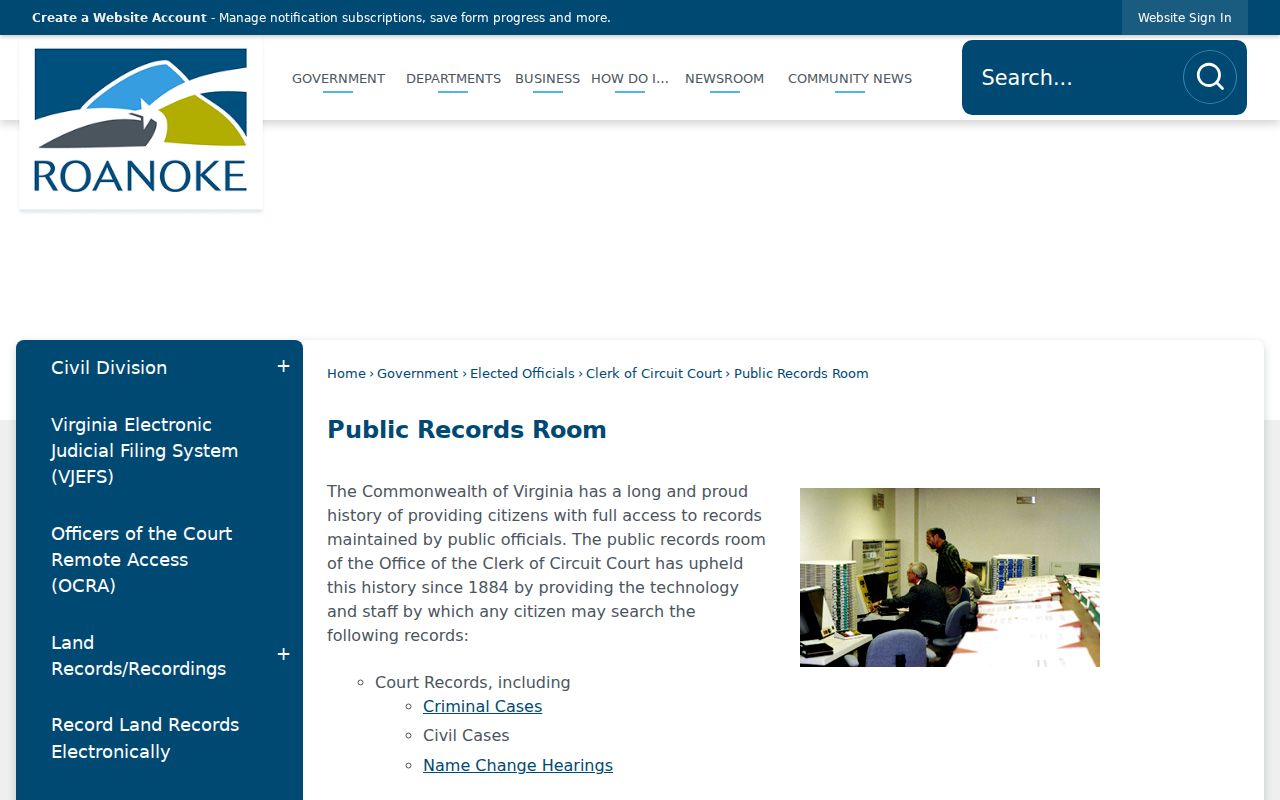
Head for the courthouse public room when Logan, the SRA catalog, or an online index fails to surface the deed volume you need.
Keep a Roanoke City Former Owner Chain Log
Log every step of a Roanoke City former-owner chain. Record the grantor, grantee, capacity, recording date, execution date if shown, instrument number or book/page, document type, and legal description. Add the Tax Number, addition, lot, block, acreage, and any plat or release cross-reference. Then mark which office or reel supplied each record. A careful log shows instantly when a name match belongs to a different parcel.
When a document points outside the city, write down why. A boundary change, an estate, or an old subdivision often explains the jump. For legal reliance, order a certified instrument. Let a qualified title professional evaluate the chain. Historical research can tell the story of a house, but a directory name or map label is not proof of title.
Use history responsibly. Former-owner research in Roanoke City is for house history, family research, and property diligence. Do not use a historical name or address to track or harass a living person.