
Roanoke City Deeds and Related Instruments
A deed is a recorded instrument that transfers an interest in land. Not every recorded paper does that, though. The Clerk of the Circuit Court also records documents that affect a parcel. Those papers can change its status without changing its owner of record. The document type matters, so read it carefully. A deed of trust, for example, secures an obligation. A later satisfaction or release shows that security was discharged. Plats, easements, judgments, and financing statements each call for their own interpretation.
| Instrument | Record purpose | What to confirm |
|---|---|---|
| Deed | Conveys an interest in land | Grantor, grantee, capacity, legal description, and recording reference |
| Deed of trust | Records a security interest tied to a loan | Borrower, trustee, lender, parcel description, and later release |
| Certificate of satisfaction or release | Records a discharge of an obligation | Instrument being released and exact parcel or parties |
| Easement | Sets a right to use or cross land | Route, benefited land, burdened land, and terms |
| Plat | Shows a recorded lot or subdivision layout | Book/page or document number and relation to the deed |
| Judgment or financing statement | May relate to an encumbrance or a different kind of filing | Underlying case, parties, scope, and legal effect |
The filing categories in Roanoke City include land records, financing statements, general miscellaneous documents, judgments, marriage licenses, and wills and fiduciary material. A category is only a doorway. Read the image or certified copy to learn what the instrument actually does.
Where Roanoke City Deed Records Begin Online
Roanoke City does not offer one complete online archive. Instead, two overlapping systems divide the ground. Logan carries land-record indexing and images from 1884 through 1997. SRA land-record indexing begins September 3, 1991, and its image coverage starts September 3, 1997. For any deed falling in the overlap, compare both results. If one system shows no image, do not assume the instrument was never recorded. Coverage also shifts by record family. Financing statements start in 1991 with images in 1998. General miscellaneous indexes follow the same pattern. Judgments begin in 1992. Wills and fiduciary material start in 2000. Logan lists wills from 1884 to 2000, plats, and commissioner-of-accounts records through 1993. When a probate transfer or lien sits in the chain, pick the category that fits. The city’s SRA page identifies its Logan and SRA ranges.
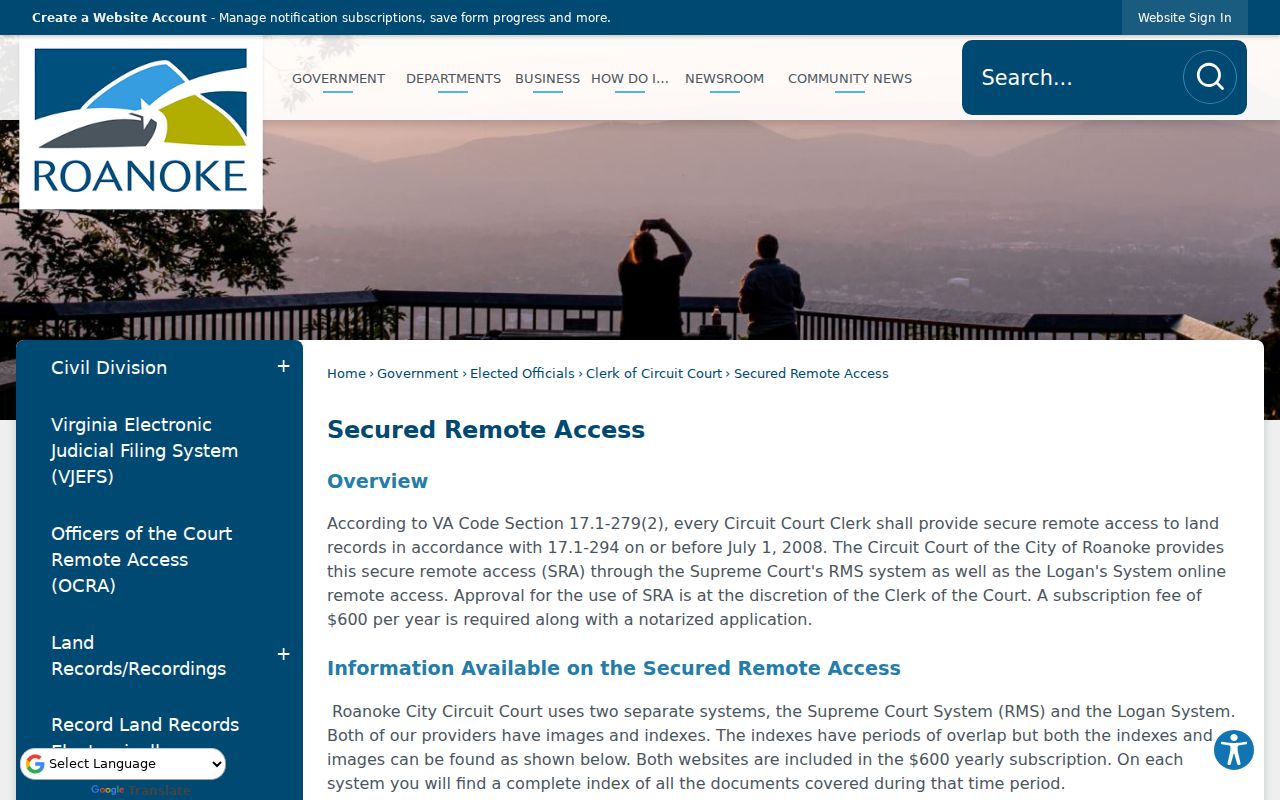
That coverage page helps you decide which system to search for a given year. Some record categories switch earlier or later than the land images do.
Search the Roanoke City Party Index
The public description supports searching by party name, document category, recording or index date, instrument number, and locality, though the live SRA controls are dynamic. Select Roanoke City Circuit Court as the locality. When tracing a transfer, search both party roles. A date range helps narrow a common name. For older land records, plats, and wills, Logan remains the extra route.
| Search key | How it helps | Care point |
|---|---|---|
| Grantor or party name | Finds a transferring party or prior owner | Try initials, middle names, entity suffixes, and spelling variants |
| Grantee or party name | Finds a receiving party in a conveyance | Capacity may be trustee, executor, spouse, or company |
| Document category | Separates land records from judgments, wills, and other families | The static city page does not publish the full dropdown |
| Recording date | Narrows a name search to a likely transfer window | Recording date can differ from signing or closing date |
| Instrument number | Retrieves a document referenced by another record | Copy the number exactly, including leading digits |
The Virginia SRA entry point routes a search to the selected circuit court.
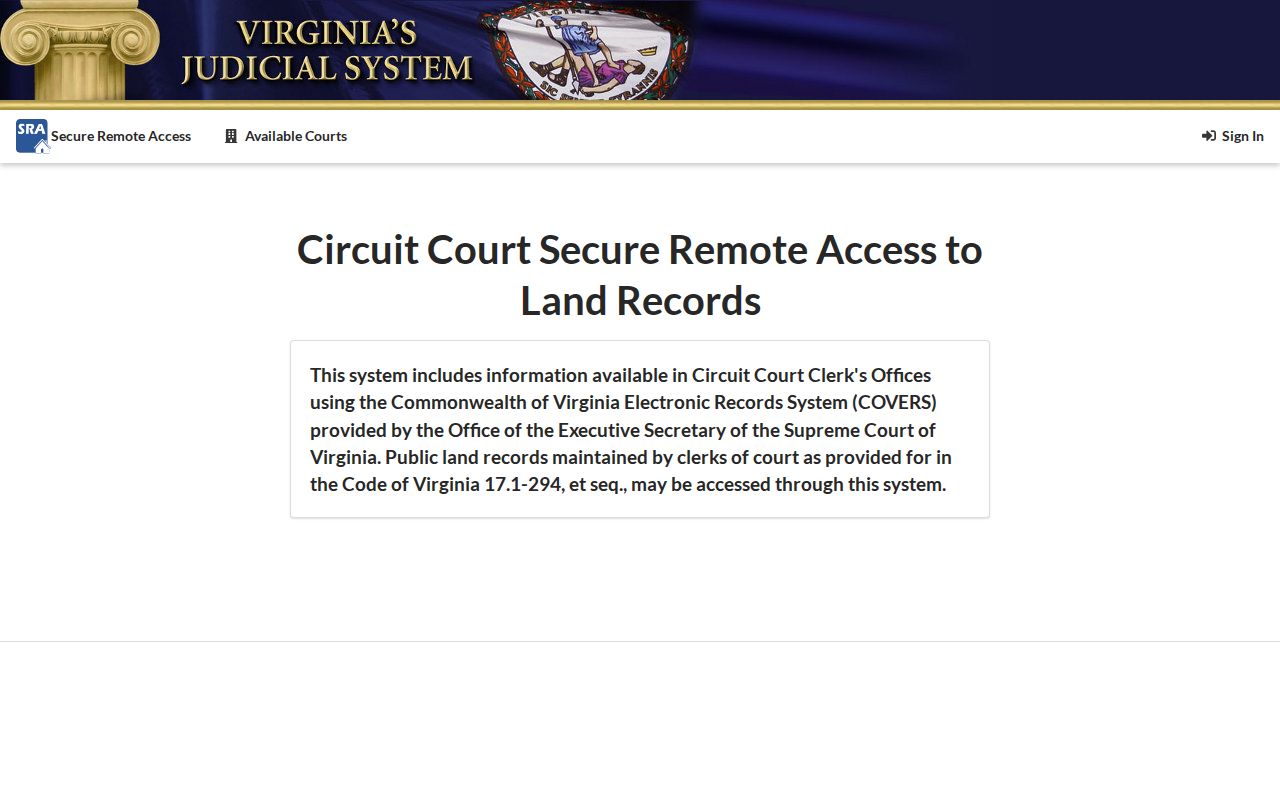
Dynamic search fields may differ from the static page description. If a result stays unclear, use the clerk public terminal and ask how to pull the instrument.
Walk a Roanoke City Grantor-Grantee Chain
The grantor conveys an interest. The grantee receives it. A chain of title is the ordered path of recorded transfers for one parcel. A single deed gives you the prior link, not every earlier owner. Start with a recent conveyance. Then search that grantee as a grantor in an earlier period. Keep matching the legal description throughout. The same name may belong to an entirely different parcel.
- Locate a current parcel in the city GIS and note its owner, Tax Number, legal description, and deed reference.
- Search the owner name in the clerk index as grantee and find the instrument that matches the parcel.
- Read the deed image for the grantor, capacity, execution date, recording date, and full description.
- Search the grantor as a prior grantee, then repeat the comparison one transfer at a time.
- When an estate, trustee, commissioner, or subdivision appears, follow that legal record before continuing the chain.
- Grantor
- The party named as transferring an interest in the document.
- Grantee
- The party named as receiving the interest.
- Book and page
- An older volume reference used to locate a paper or microfilm entry.
- Instrument number
- A document identifier used in a newer index or portal.
Never rely on the street address alone. An old deed may use a block, lot, addition, acreage, or adjoining-owner description that predates the current address.
Check Roanoke City Dailies for New Filings
Some recorded but not yet indexed documents, called dailies, may be visible to approved SRA users, according to the city. This matters right after a closing. The GIS owner field may not yet show the transfer. A party search may return nothing until indexing finishes. Ask the clerk whether the recent instrument has been recorded. Ask as well whether a daily entry exists. Keep execution, recording, and index dates separate. Parties can sign well before delivery. The clerk records the instrument later, and the owner roll updates on its own schedule. A timestamp in one system promises nothing about the others. For the parties and terms, the deed image is the place to read.
Get a Roanoke City Deed Copy
The Clerk’s land-record page describes recording and copy services, while the public records room is the hands-on route. The courthouse room sits on the third floor at 315 Church Avenue SW, open 8:00 a.m. to 4:00 p.m. on weekdays except holidays. The deed desk is 540-853-6709. Bring a party name, document number, or book/page reference to make retrieval quicker. Ordinary copies run fifty cents per page. Certification adds two dollars per document. Online access is a separate matter: the city lists an annual SRA subscription of six hundred dollars, which requires an application and a notarized subscriber agreement. Electronic-recording vendors exist for submitting new instruments. They are not an alternate official deed index. The Circuit Clerk page explains local land-record services and copy pricing.
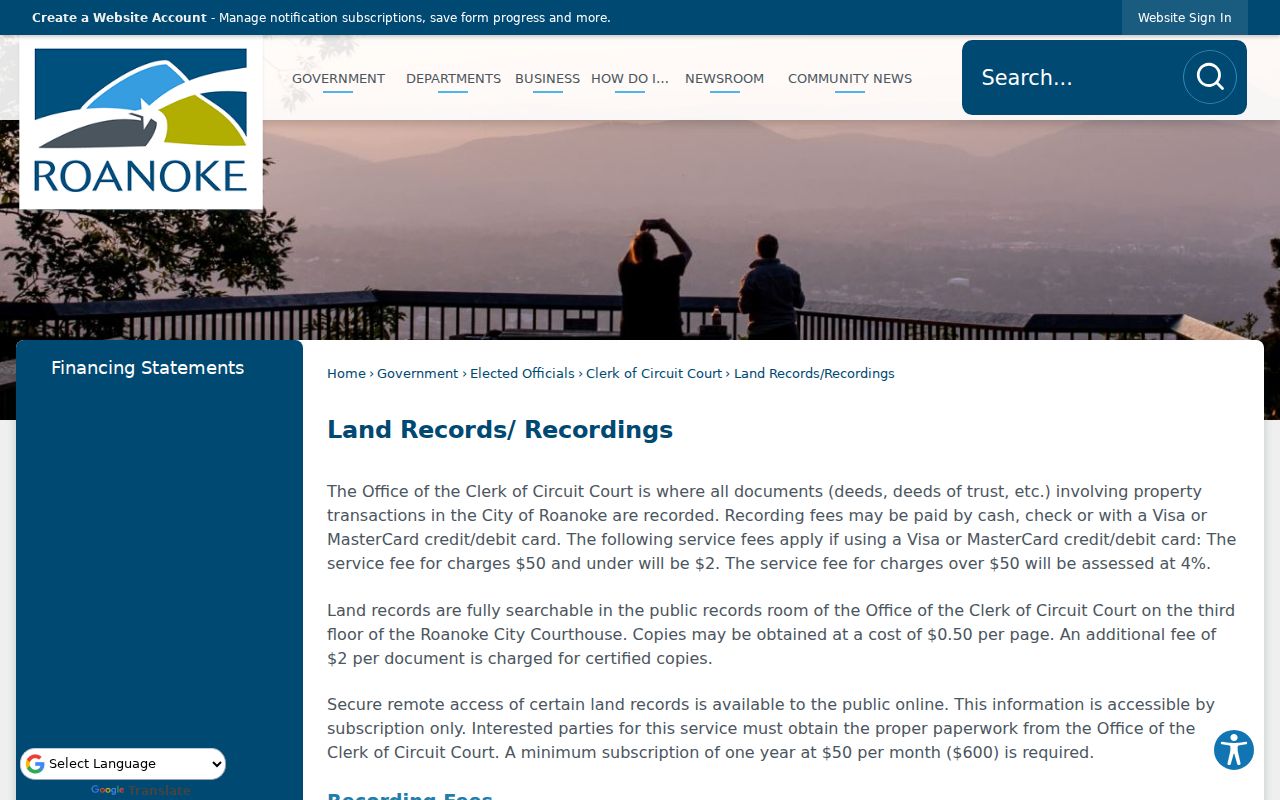
For the current copy process and fee statement, use the official clerk page. A recording fee for a new filing is a separate charge from a research copy.
Use the Roanoke City Courthouse Room
The courthouse public room still matters for Roanoke City deed records. Older book references, local terminals, and instruments without a web image all live there. The clerk's public-room categories cover land records and judgments. They also cover financing statements, trading-as names, marriage licenses, wills, probate, and court records. Ask for City of Roanoke files by name. Roanoke County keeps a separate Circuit Court Clerk with its own records.
According to the public records page, the room has served visitors since 1884. That year matches the start of the Logan land record range. It does not mean every older instrument is digitized. A deed records search may still lead to a physical book. Staff can explain a search procedure and point you to the right shelf. They cannot give a legal title opinion. The public-room page lists access hours and record categories.
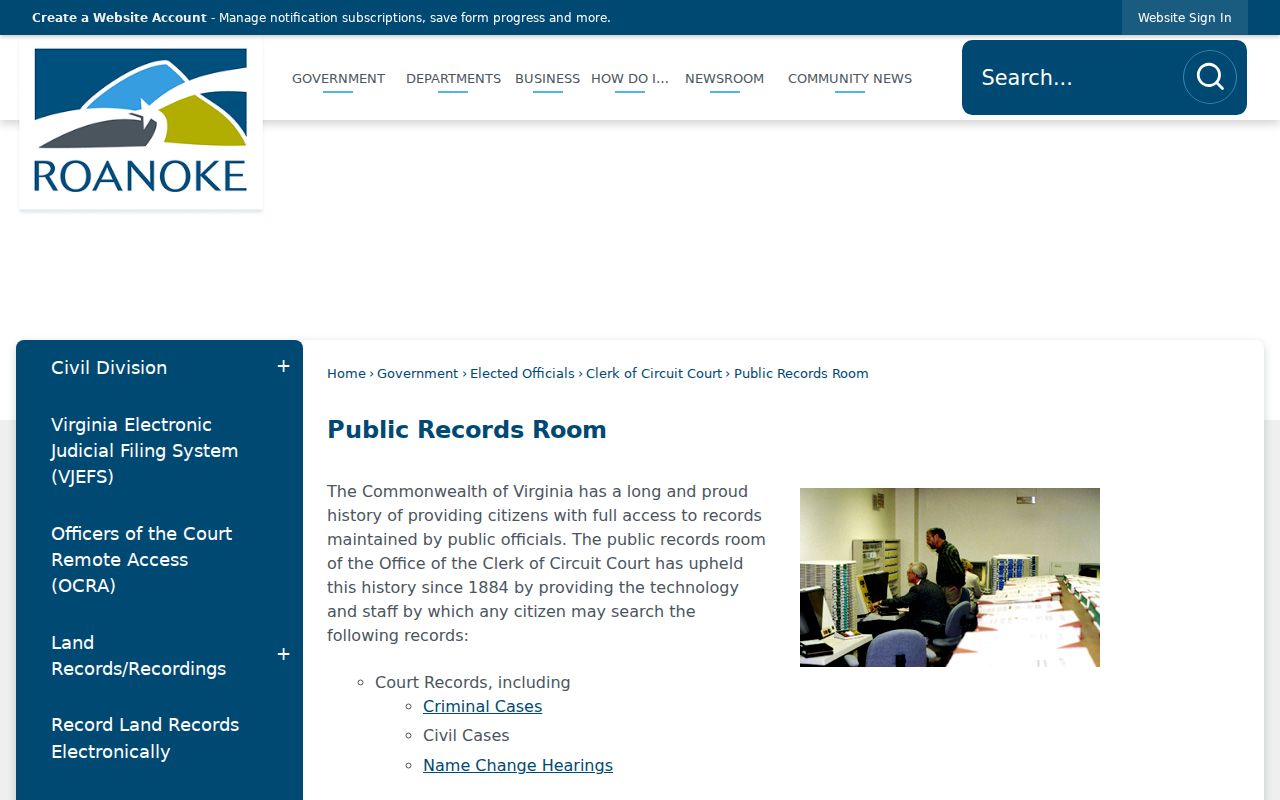
Sometimes an index entry stops short of an online image. That is when the counter and terminal close the gap for Roanoke City deed records.
Roanoke City Deeds Before the Modern Address
The Library of Virginia microfilm catalog holds historic Roanoke City Hustings Court deed reels. Among them are Deeds Volume 10 from 1887 to 1888 plus several mid-1890s volumes. Treat each entry as a finding aid. No single reel is guaranteed to hold every parcel. Search by name, lot, block, or addition. Then confirm the reference with the catalog or the clerk.
Older title history can reach into predecessor or neighboring records. Roanoke County split from Botetourt County in 1838. The Library of Virginia dates city formation to 1852. The Town of Roanoke began in 1882. The independent city date is 1884. The right office depends on where the land lay at the time. Old descriptions may also carry historic neighborhood names. These include Big Lick, Gainesborough, Antwerp, and Old Lick. The Library of Virginia catalog is the finding aid for Roanoke microfilm reels.
Roanoke City Deed Records Include More Than Sales
A deed records search in Roanoke City should reach beyond simple conveyances. Releases, judgments, easements, and probate instruments often matter as much as the sale itself. After a deed of trust, look for a certificate of satisfaction in the city record categories. Then read the document to learn which loan or parcel it touches. A judgment that matches a name still needs case and parcel context. Financing statements can cover personal property. Not every filing is a lien on land.
Probate can bridge the gap when an owner died. The SRA lists Wills and Fiduciary records, and Logan holds older wills and commissioner-of-accounts material. Search the estate and fiduciary names. Then tie the result back to the land description. A death certificate alone never transfers real estate. The land record that completes the path may instead be a deed of distribution. It could also be an executor deed, or a court order.
Limits of Roanoke City Deed Records
Recording places an instrument in the clerk record. An index description decides nothing about legal effect. A deed image may carry qualifications, conditions, or references to another deed entirely. Unrecorded interests can exist. A recorded deed never certifies the land is free of liens or disputes. Only a title search assembles the full record trail. It then evaluates that trail for a Roanoke City parcel.
Recorded is not guaranteed. Roanoke City deed records show documents filed with the clerk. For a title decision, use a qualified title professional or attorney and request certified copies when official proof is needed.
The city GIS map is not a legal description. A postal address is no substitute for the deed's property description. For the backward chain of owners, the former owner history page treats that work as its own research task.